
Magnetic resonance-based eye tracking without camera
OpenMReye is a growing ecosystem of open computational tools for MR-based eye tracking for functional MRI research and clinical applications.
What is magnetic resonance-based eye tracking?MR-based eye tracking describes a set of techniques that reconstruct gaze behavior directly from the MR-signal of the eyes, without requiring a camera. It works because gaze position and movement affect the MRI signal of the eyes and optic nerves, allowing to infer gaze-related variables directly from that raw signal.
By replacing camera hardware with smart, open-source software, OpenMReye enables even the smallest MRI facilities and hospitals to use (MR-based) eye tracking for a wide range of research and clinical applications.
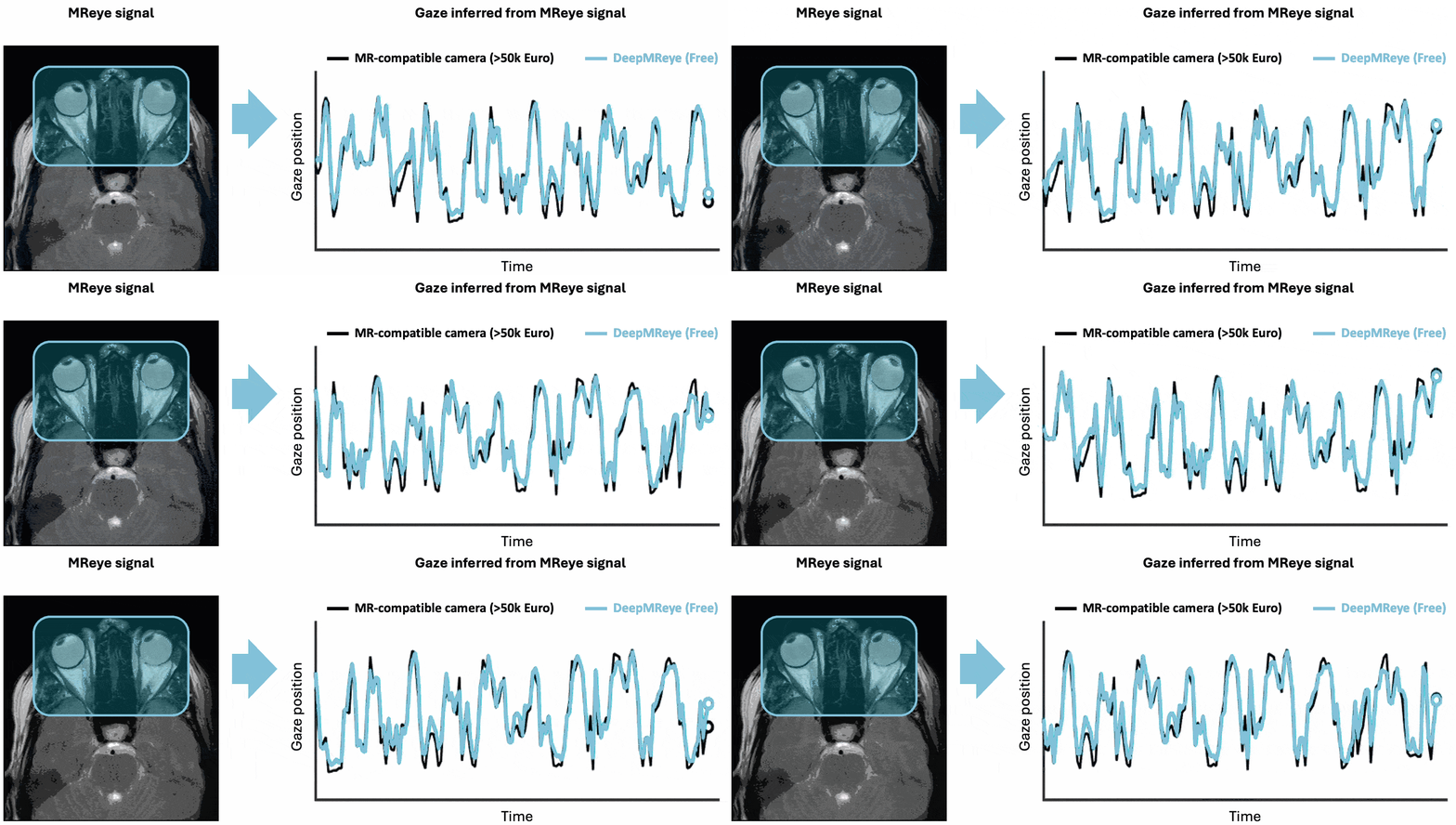
Gaze behavior provides a powerful window into human cognition and a promising biomarker for many neurological conditions (e.g., Parkinson's Disease). Yet, most brain imaging studies miss this crucial measure, primarily due to the high costs (often >€50,000) and cumbersome use of MR-compatible cameras. Moreover, cameras impose experimental constraints (e.g., the eyes need to remain open).
While MR-based eye tracking comes with limitations compared to cameras (e.g., lower temporal resolution), it also has many advantages. For example, no MR-compatible hardware is needed, drastically reducing costs and setup time. Moreover, it works in many existing fMRI datasets, when the eyes are closed (e.g., sleep), and in patient groups for which cameras are difficult to calibrate (e.g., blind populations).
MR-based eye tracking complements camera-based systems by enabling research questions that are otherwise difficult or impossible to address.